

The long view: Why organizations build corporate art collections
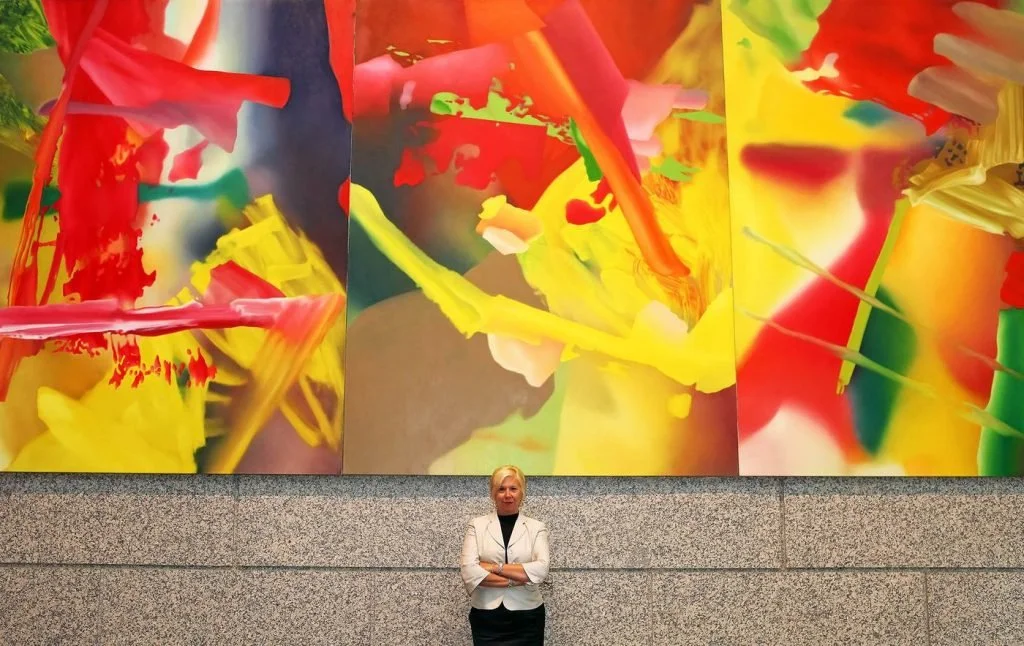
Gerhard Richter, Abstract Painting (Faust), 1981, Deutsche Bank New York office, New York, USA
Most companies invest heavily in culture—leadership offsites, employer brand campaigns, workplace design, customer experience. The challenge is that many of those initiatives fade quickly: a rebrand gets refreshed, an office gets redesigned, a “culture moment” turns into a memory.
Art is different. A corporate art collection can function as a durable cultural asset—one that employees and clients experience every day—while also being ownable, governable, and documentable in ways typical décor is not.
Below are the most compelling, corporate-grade reasons to build a collection (and how to do it responsibly).
1) Art makes culture tangible and repeatable
Culture is often described. Art is seen.
A collection gives your organization a consistent, physical expression of values: what you support, what you believe, what you want your spaces to signal. This is why some of the most established corporate collections were built explicitly to strengthen the workplace experience and connect colleagues, clients, and communities to contemporary culture—like the JPMorgan Chase Art Collection, founded in 1959 as “Art at Work.”
2) It improves the lived experience of work, not just the look of an office
There’s credible research suggesting that workplace art influences how people feel, connect, and engage at work.
A widely cited study from Harvard Project Zero examined how employees and board members described the impact of workplace art—highlighting themes like social interaction, emotional response, and a richer workplace experience.
If you’re designing environments for high performance—whether that’s a VC firm hosting founders, a law office welcoming clients, or a medical practice aiming for calm and trust—art is one of the most efficient “always on” culture levers you can install.
3) It strengthens brand signal and client trust
Clients infer a lot from a space in seconds: taste, standards, stability, seriousness. Art is a high-signal way to communicate those things without saying them out loud.
This is especially true in professional services (law, finance, consulting), where environments need to project both authority and humanity—and in hospitality-adjacent spaces (lobbies, client floors, executive briefing centers) where experience is part of the product.
4) It’s capital with optionality (not a sunk décor expense)
Décor is usually purchased like a consumable: it’s chosen quickly, replaced frequently, and has little or no residual value. A collection, by contrast, can be:
Ownable and transferable
Insurable
Appraisable
Deployable across locations
Potentially resellable through established secondary markets
That doesn’t mean art is “guaranteed upside.” It means art can be treated with an asset mindset—with governance and documentation—rather than written off as an aesthetic line item.
5) It creates structure and governance around an otherwise “taste-driven” spend
A corporate art collection becomes powerful when it stops being ad hoc.
A well-run program typically includes:
A written collection thesis (what you collect and why)
A budget and approval workflow
Provenance and condition documentation standards
Insurance, installation standards, and location tracking
Periodic reporting (collection status + market context)
A plan for deaccession (resale / donation / redeployment)
This is what turns “nice office art” into a real collection.
6) Tax and accounting become manageable when documentation is built in
The tax and accounting treatment of artwork can be nuanced. For example, works of art generally do not have a determinable useful life in the same way equipment does, and depreciation is often not allowable depending on facts and circumstances—something practitioners have discussed in detail.
What matters for companies is that the collection is supported by audit-ready records: invoices, provenance, appraisals when appropriate, shipping/installation documentation, and internal tracking—so your finance and legal teams can make informed decisions.
The Internal Revenue Service provides foundational guidance on asset basis (useful context for how property is treated and documented), though your situation will depend on your specific facts.
We provide collection support and documentation; tax, legal, and accounting advice should be obtained from your professional advisors.
What “the long view” looks like in practice
A corporate art collection is not about filling walls. It’s about building an enduring expression of identity—with the same seriousness you’d apply to brand, workplace strategy, and long-term capital decisions.
If you want your spaces to do more than look good—if you want them to mean something and hold value—collecting art is one of the few moves that compounds.
