

Why investing in a collection changes how you build wealth and culture
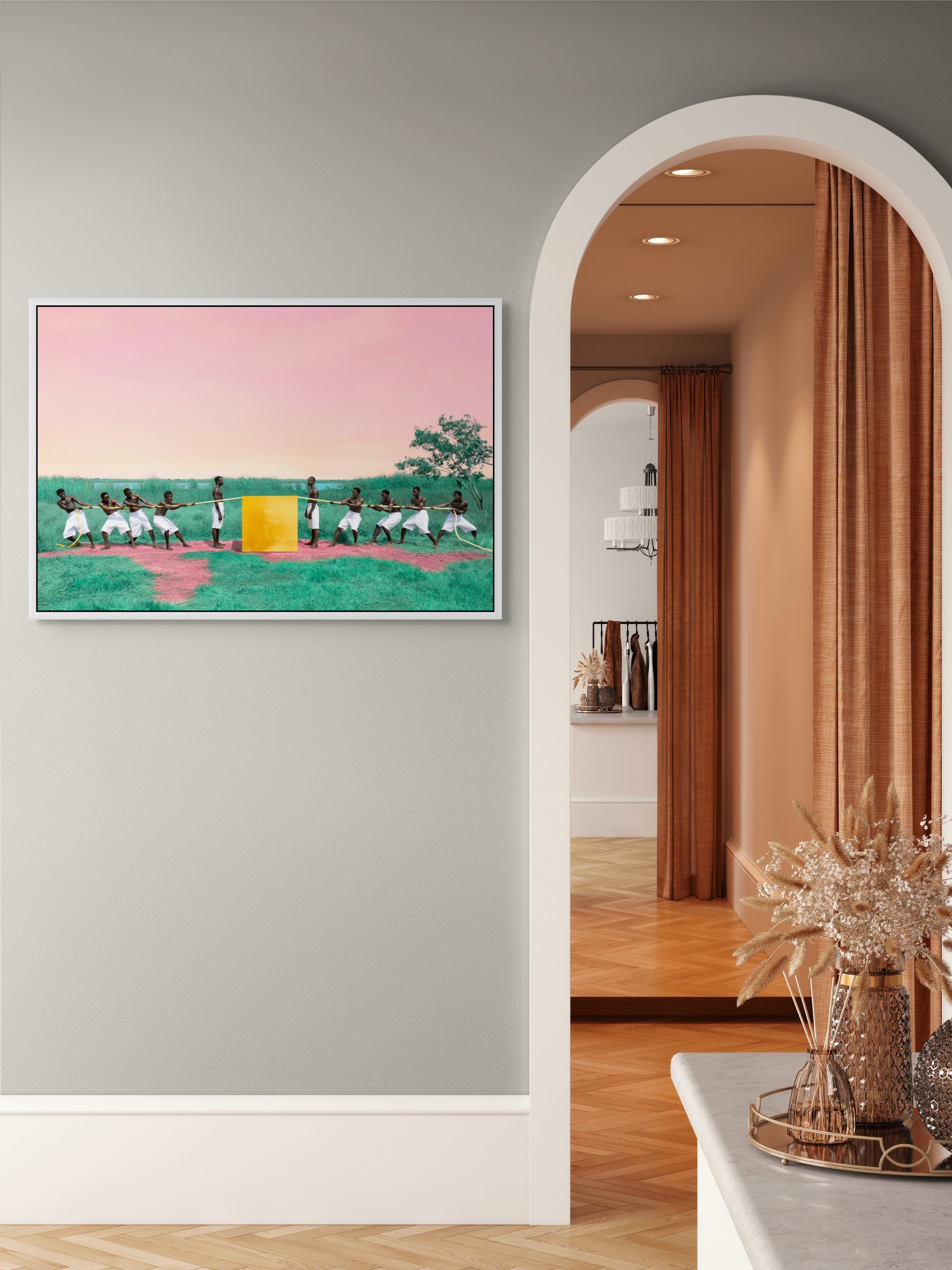
Prince Gyasi’s similar works have sold 105% over estimate
Most people buy art one piece at a time.
Collectors build something larger.
A collection isn’t just a group of artworks—it’s a point of view, a long-term strategy, and a way of participating in culture while allocating capital with intention.
If you’re already investing in your career, your home, and your future, building an art collection is one of the few moves that compounds across financial, cultural, and emotional dimensions.
1. A collection forces long-term thinking
Single purchases are often reactive: a trend, a moment, a space to fill.
A collection requires you to step back and ask:
What do I want to live with over time?
What ideas, aesthetics, or voices do I believe in?
What kind of cultural footprint do I want to build?
That shift alone—away from impulse and toward intention—is what separates decoration from collecting.
2. Art is one of the few assets you actually live with
Most investments are invisible. Art isn’t.
You experience it every day. It shapes your environment, your conversations, and how others perceive your space. Over time, it becomes part of your identity—not just your balance sheet.
A collection lets you allocate capital to something that enriches your daily life, not just your future self.
Join the future of art investing
〰️
Join the future of art investing 〰️
3. Collections create context—and context creates value
Individual artworks gain meaning and strength when they’re placed in dialogue with one another.
Collectors who think in terms of collections:
Build thematic or stylistic coherence
Support artists across bodies of work
Develop deeper knowledge of the market and institutions
That context isn’t just intellectually satisfying—it’s often what underpins long-term value.
4. You gain optionality most purchases don’t offer
A thoughtful collection isn’t a sunk cost. Over time, it can offer options:
Hold and continue living with the work
Sell selectively as markets evolve
Donate or loan works to institutions
Reframe or redeploy pieces across spaces
Optionality is what separates ownership from consumption.
5. Collecting connects you to culture as it’s being made
When you collect living artists, you’re not buying history—you’re participating in it.
You’re supporting creative labor, engaging with ideas of your time, and building relationships with galleries, institutions, and other collectors. A collection becomes a record of when and how you showed up.
6. A collection evolves with you
The best collections aren’t static. They grow as your taste sharpens, your life changes, and your perspective deepens.
What you collect at 30 may differ from what you collect at 45—but together, those choices tell a story. A collection becomes a timeline of your thinking, not just your purchases.
The difference between owning art and collecting it
Owning art can be beautiful.
Collecting art is intentional.
It’s the difference between acquiring objects and building something that endures—something that holds meaning, value, and relevance over time.
If you’re ready to move beyond one-off purchases and start building with purpose, a collection is where art investing becomes transformative.
