
Why Art Belongs in Your Financial Conversations — Not Just Your Walls
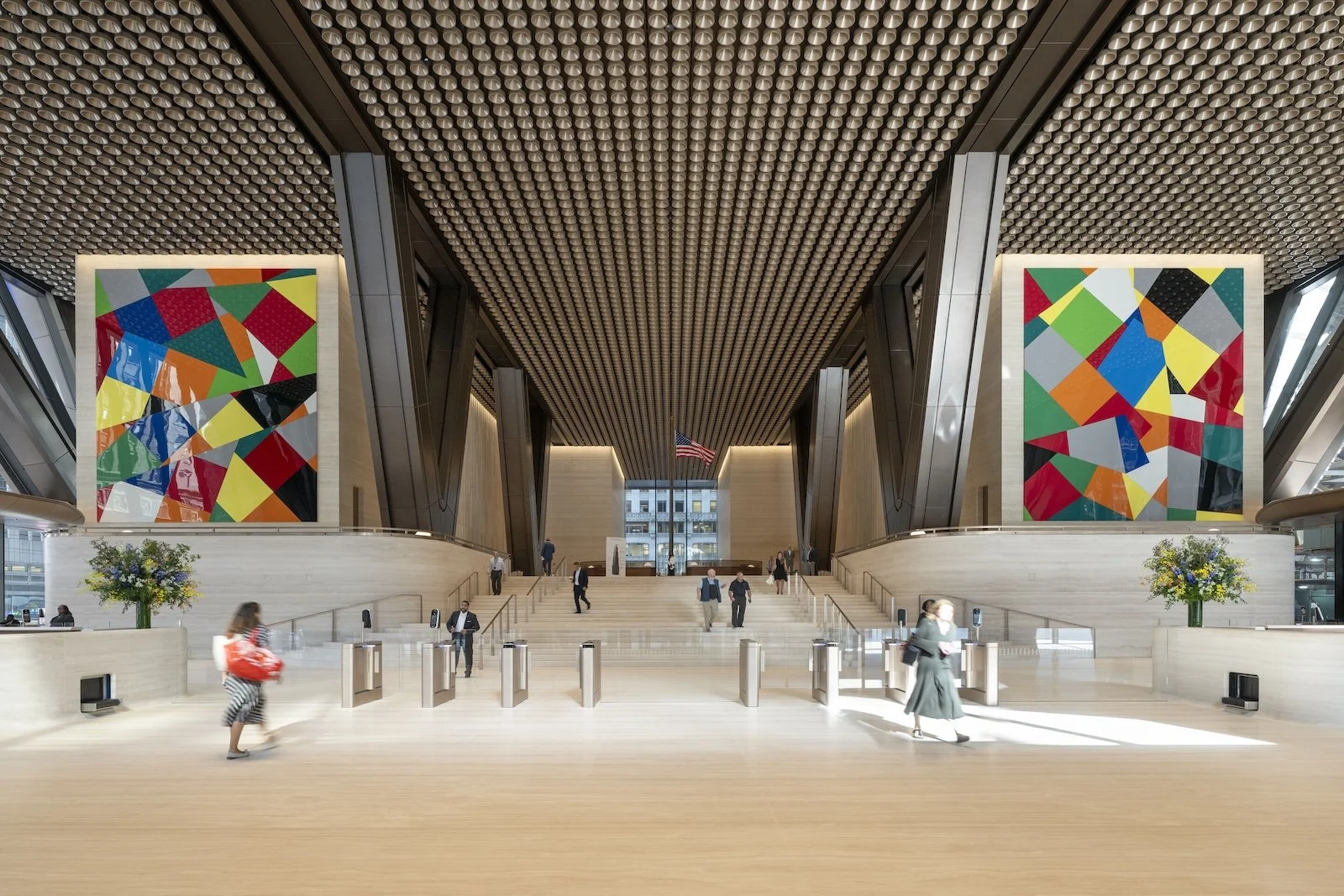
Gerhard Ricther’s Color Chase One and Color Chase Two, installed at 270 Park Avenue, image via JPMC.
When most people think about investing, they picture stocks, bonds, and real estate. Familiar asset classes with centralized markets and daily price signals. Art, by contrast, often feels opaque, emotional, or reserved for insiders.
But as outlined in U.S. Bank’s article Art and Taxes: Tips for Investing in Art, shows art has increasingly entered serious financial conversations — not as a replacement for traditional assets, but as a complementary one. When approached with discipline, research, and the right expectations, art can serve as both a cultural asset and a financial one.
At Unframd, we believe the most compelling investments live at the intersection of aesthetic conviction and financial clarity. Below, we break down what that really means.
🎨 Art Isn’t Just Emotional — It Can Be Financial
According to U.S. Bank, art has historically delivered competitive long-term returns, with studies showing average annual returns in line with, and at times exceeding, certain traditional asset classes over multi-decade periods. That performance, however, comes with important caveats: variability by artist, market cycles, and significant dispersion between top-performing works and the rest.
This is precisely why art should not be treated as a speculative bet or a decorative afterthought. Financial outcomes in art are driven by selection, timing, price discipline, and context, not taste alone.
At Unfram_d, we don’t frame art as “alternative for the sake of alternative.” We frame it as selective exposure to culture-driven value creation, grounded in data, comparables, and long-term market behavior.
🛍️ How to Approach Buying Art — Why Advisors Matter
The art market is fragmented, relationship-driven, and largely opaque. There is no single exchange, no standardized pricing model, and no public ledger of transactions. As U.S. Bank notes, works can be acquired through primary markets (galleries and art fairs) or secondary markets (auctions and private resales), each with distinct pricing dynamics, risk profiles, and liquidity considerations.
This lack of transparency is exactly why Unfram_d exists.
At Unframd, we help collectors do the work most buyers never see:
deep market research, price validation, artist-level sales analysis, liquidity assessment, and long-term positioning. Provenance, condition, editioning, institutional support, and comparable sales all materially affect value — yet none are obvious from a price tag alone.
Buying art without guidance often means paying for surface appeal. Thoughtful advisory ensures you’re acquiring work with intent, context, and durability, not just something that looks good today.
💸 Taxes and Practical Realities
Art ownership comes with financial considerations that differ meaningfully from traditional securities. As U.S. Bank highlights, artwork is typically treated as a collectible for tax purposes, which can mean higher capital gains tax rates upon sale, as well as state-level sales and use taxes at the time of purchase.
These nuances don’t negate art’s role as an asset, but they do reinforce the importance of planning. Art investing works best when it’s integrated into a broader financial picture, often alongside professional tax and wealth advisors who understand how collectibles function within portfolios, estates, and long-term strategies.
🧠 Long-Term Perspective — Price, Liquidity, and Time Horizon
Art is often described as a long-term investment, but the reality is more nuanced.
Liquidity in the art market is directly correlated with price. Lower-priced works tend to have broader buyer pools and more frequent turnover. As prices rise, buyer universes narrow, transaction timelines lengthen, and holding periods extend. Simply put: the higher the price, the longer the expected hold.
This is why price point selection is critical. While U.S. Bank emphasizes patience in art investing, at Unfram_d we help collectors go a step further — aligning price tier, liquidity expectations, and time horizon from the outset.
Art isn’t illiquid by default. It’s selectively liquid, depending on where you sit in the market and how you enter it. Strategic acquisition creates optionality; indiscriminate buying creates lock-in.
🎯 What This Means for the Modern Collector
Art occupies a rare position among assets:
It diversifies beyond traditional financial markets
It can preserve and grow value over time
It delivers daily, lived experience — not just statements on a screen
When approached with rigor, art isn’t a contradiction to financial discipline — it’s an extension of it. The key is moving beyond decoration and into intentional collecting, where cultural relevance and financial logic reinforce one another.
That’s the philosophy behind Unframd: helping collectors navigate art not as insiders or speculators, but as thoughtful stewards of both capital and culture.
